

How Fynrex turns 40-jurisdiction monitoring into day-one action items.
Four stages: ingest from official sources, parse for scope and effective date, map to your policy register, route to the control owner responsible. The same morning the rule publishes.
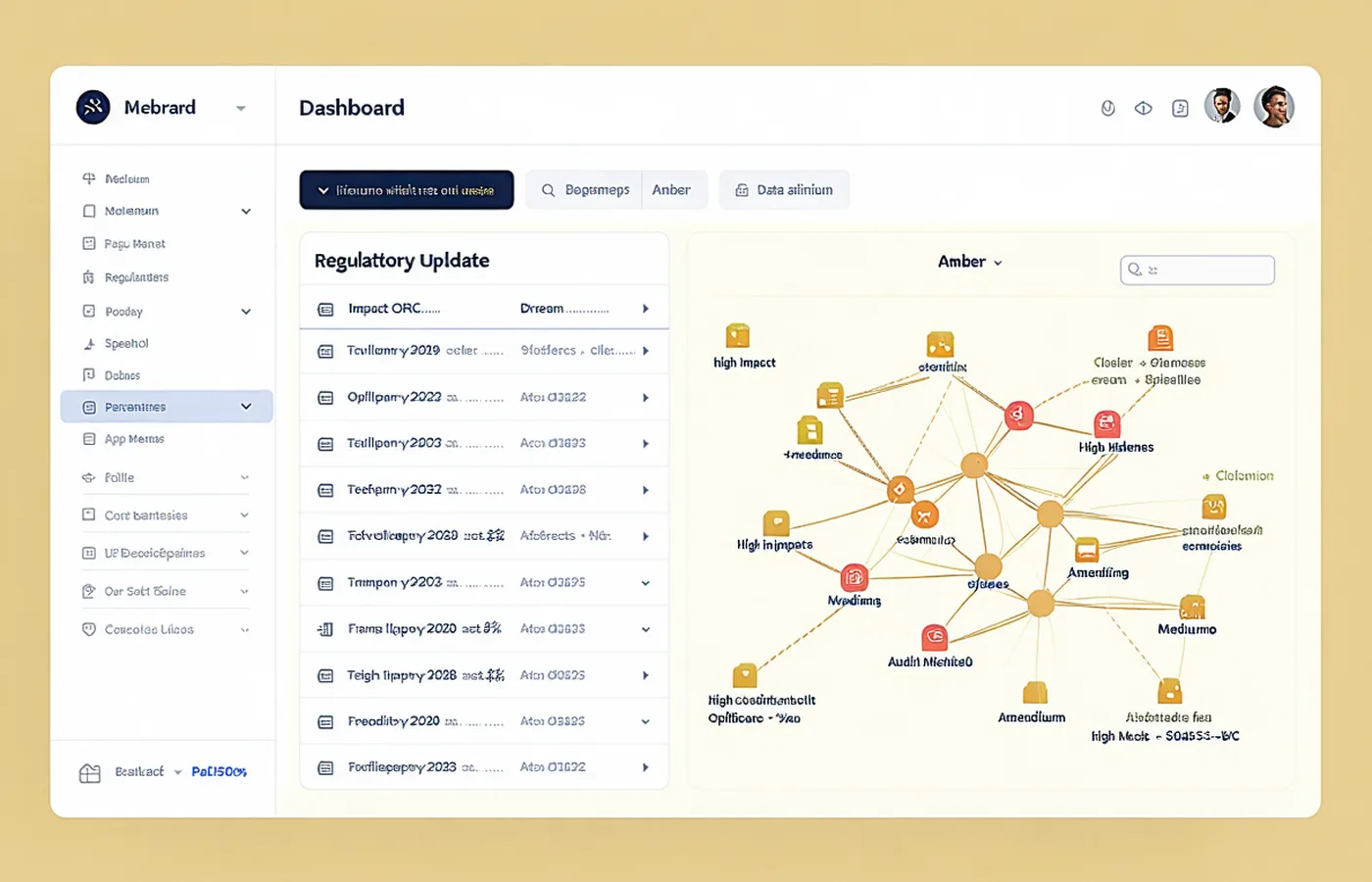
Where we read from.
Fynrex ingests directly from primary regulatory publications — official journals, agency websites, gazette RSS feeds, and enforcement action registers. No third-party aggregator. No repackaged summaries. When we cite a change, there is a source URL to the original publication.
Update schedule: US federal agencies (SEC EDGAR, CFTC, OCC, FRB, FinCEN, FINRA, CFPB) and the EU Official Journal are scanned daily at 06:00 EST. UK (FCA, PRA) and APAC primary regulators (MAS, APRA, ASIC) are also ingested daily. Remaining jurisdictions are ingested twice weekly. Enforcement action databases — PACER, the FCA enforcement register, and national equivalents — are checked separately from rulemaking publications.
Consultation papers and proposed rules are ingested in a separate queue from finalized rules. Your team sees what is coming before it is binding — with the publication date and the comment period deadline visible.
Finding what changed — and what it means for you.
Fynrex extracts the effective date, impacted instrument type (bank, insurer, broker-dealer, payment institution), rule section reference, and topic keywords — then matches them against your firm's internal policy taxonomy.
Fynrex does not interpret regulatory text. Every flagged change links directly to the verbatim source paragraph. We surface the text and the scope; your compliance team makes the legal determination. This is a deliberate design choice — no NLP layer should stand between a compliance officer and the original regulatory language.
Instrument type tagging is derived from the regulator's own scope language in the rule — not our classification. When scope is ambiguous, the item is flagged for review rather than auto-dismissed.
Amendment to SYSC 6.3 introduces enhanced customer due diligence requirements for electronic money institutions. Affected firms must review correspondent banking arrangements by effective date.
View source paragraphFrom regulatory text to your policy register.
During onboarding, your compliance team provides your policy register — the names and topic descriptions of each policy document. Fynrex builds a topic-level mapping between regulatory subject areas and each policy. The setup typically takes one structured session.
When a change is ingested, the system scores each policy by relevance and surfaces the specific regulatory paragraph that triggered the match. A High relevance score means the rule section addresses the same subject matter as the policy. Medium means partial overlap — your team decides whether a formal review is warranted.
Policy register updates take effect in the next scan cycle. Add a new policy on Monday; it is in scope for Tuesday's ingestion. No re-onboarding required.
The change goes to the right person, automatically.
Each policy in your register is linked to a named control owner during onboarding. When a mapped policy is flagged by an incoming change, Fynrex creates an action item for that control owner — with the regulatory source citation, the matched policy clause, and the ask: review, confirm, update, or escalate.
The deadline is calculated from the regulatory effective date minus your configured lead time. Default is 30 days. Adjustable per jurisdiction — you may want longer runway for major rulemaking cycles and shorter windows for enforcement notices. Overdue items escalate to the compliance manager automatically.
Every action — created, updated, closed — is logged with the responsible user and a timestamp. The complete audit trail is exportable as PDF or CSV for examination preparation. If an examiner asks how your firm responded to a specific change, the answer is in the log.
| Policy | Jurisdiction | Due | Status |
|---|---|---|---|
| CDD Policy | FCA | May 1 | In Review |
| AML Monitoring | FinCEN | Apr 15 | Overdue |
| Reporting Controls | ESMA | Jun 1 | Open |
| SYSC Policy Review | PRA | Mar 28 | Closed |
See it working on your policy register.
Bring your top 5 jurisdictions and a list of your most exposed policies. We run a live demo — real regulatory changes, mapped to your taxonomy — in 30 minutes.